
Umrah with Elderly Parents: A Practical Planning Guide
Last updated: 26 September 2026. This guide covers travel planning, not medical advice. Talk to your parent’s doctor before booking.
Taking a parent for Umrah is one of the most meaningful trips a family can make. It also needs more planning than a solo trip: shorter walks, more rest, the right flights and a plan for crowds. Here is what makes the biggest difference for older pilgrims travelling from the United States or Canada.
1. Start with a health check
- Book a visit with their doctor several weeks before travel to discuss the long flight, heat, walking distances and any conditions.
- Arrange the quadrivalent (ACYW) meningococcal vaccine; Saudi Arabia requires it for Umrah pilgrims, and it must be given at least 10 days before arrival (CDC).
- Ask the doctor for a short written summary of conditions and medications to carry with you.
2. Choose the season carefully
Heat is one of the biggest risks for older pilgrims. The cooler months, roughly November to February, are usually easier. Summer temperatures in Makkah can exceed 43°C (110°F), according to the CDC. If you are considering Ramadan, the first ten days are usually less crowded than the last ten; see our Ramadan 2027 guide.
3. Pay for location, not stars
For an elderly parent, a hotel close to the Haram matters more than its star rating. Every prayer means a walk there and back, five times a day. A closer hotel also makes it easy to go back and rest between prayers.
- In Makkah, hotels in the Abraj Al Bait complex beneath the clock tower sit right beside Masjid al-Haram. Our luxury packages use the Makkah Clock Royal Tower (Fairmont) or similar.
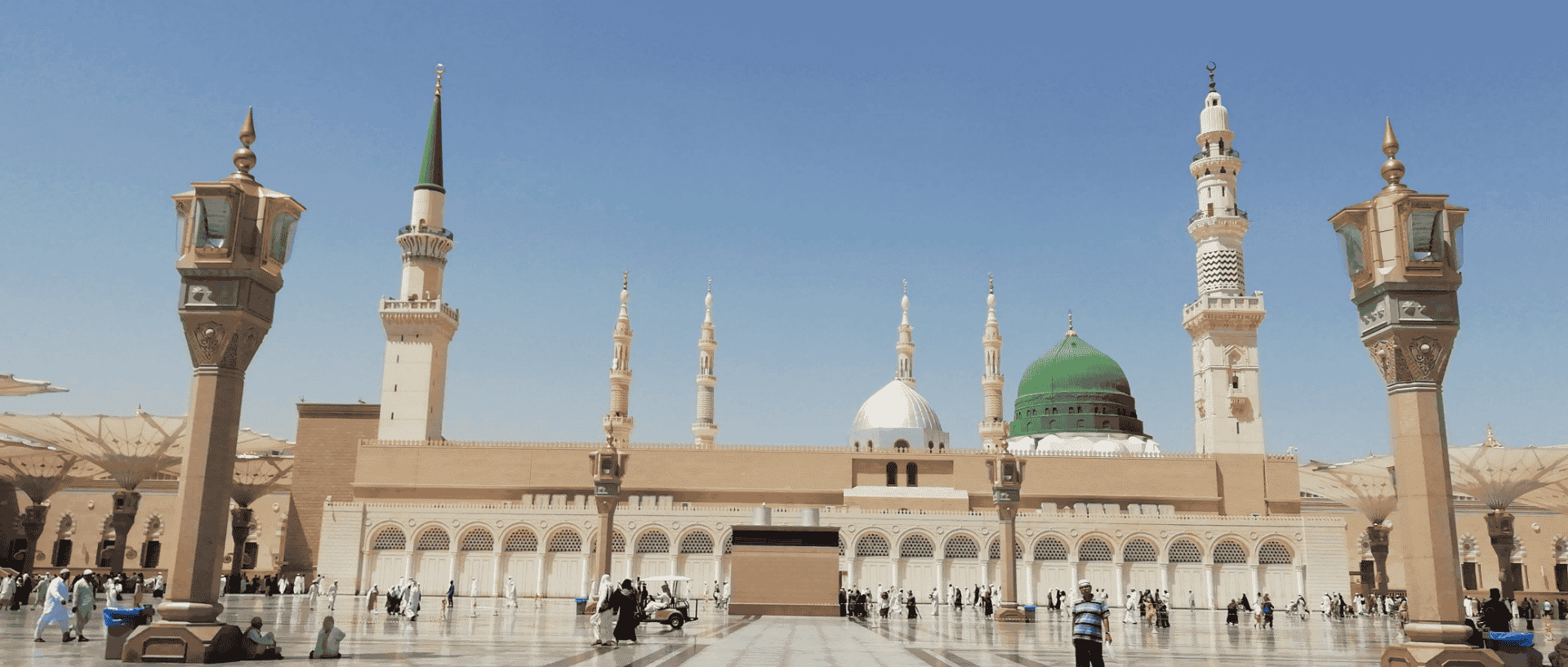
- In Madinah, hotels on the central area around Masjid an-Nabawi keep walks short. Anwar Al Madinah Mövenpick, used in our luxury packages, describes itself as the nearest hotel to the Prophet’s Mosque.
- Our guide to choosing Makkah and Madinah hotels lists the questions to ask about walking routes and accessibility.
- Ask for a room on a lower floor or near the lifts, and whether the hotel has lifts that are busy at prayer times.
4. Book airport wheelchair assistance
- Request wheelchair or guided assistance with the airline when you book, and confirm it again a few days before the flight.
- The US Department of Transportation says airlines, including foreign carriers on flights to and from the US, must assist passengers through the airport and between connecting flights (US DOT). Canada has similar rules for accessible air travel under the Canadian Transportation Agency.
- Choose flights with sensible connection times. A very short layover is stressful with a wheelchair; a very long one is tiring.
- Consider a mid-journey rest: some families add a night or two in Istanbul or Dubai through our Umrah and holiday packages.
5. Plan Tawaf and Sa’i with a wheelchair or cart
Tawaf and Sa’i involve a lot of walking. Many older pilgrims perform them in a wheelchair or electric cart.
- The authority that runs the Two Holy Mosques launched the Tanaqol app for booking electric carts for Tawaf and Sa’i. Its announcement lists cart points at the Marwah (25), Al-Arqam (16), Ajyad (5) and Al-Shabika (66) gates, with wheelchair services in the eastern and western squares (Saudi Press Agency, 2024). Check the current arrangements when you arrive.
- You can also bring a lightweight folding wheelchair; check your airline’s rules for mobility aids.
- Choose quieter times. Late at night or mid-morning is often calmer than just after the obligatory prayers.
6. Manage heat, water and medicine
- Carry water and encourage small, frequent drinks.
- Use an umbrella for shade outdoors, and rest in the hotel during the hottest hours.
- Keep medicines in the carry-on in their original packaging, with copies of prescriptions, and bring extra for delays.
- Set phone reminders for medication times, which are easy to miss with a new routine and time zone.
- Know the warning signs of heat exhaustion and dehydration, and get help early.
7. Pace the trip
- Plan a rest day after arrival before performing Umrah if the flight was long.
- Allow more nights overall, so that no single day is overloaded; 10 nights is often more comfortable than 7.
- Keep Ziyarat visits short and consider a private vehicle.
- Agree a meeting point in case you are separated in the crowds, and write your hotel name and phone number on a card in their pocket.
8. Insurance
Buy travel medical insurance that covers Saudi Arabia, pre-existing conditions (check the terms carefully) and medical evacuation. Canadian provincial health plans and US Medicare generally cover little or nothing abroad, so do not rely on them.
9. Women travelling with parents
Some families send daughters to accompany a parent. Canada’s travel advice says women of all ages may travel without a mahram to perform the pilgrimage (travel.gc.ca). Views on this differ among scholars, so families often consult a scholar they trust.
How we can help
Tell us about your parent’s mobility and any needs, and we will suggest hotels close to the Haram, suitable room sharing and a comfortable pace. See our luxury Umrah packages, compare all Umrah packages, or read what we offer travellers from the USA and Canada. Call +1 972 968 7722, WhatsApp +1 945 335 4921 or send an enquiry. Our Umrah packing checklist is a useful next step.
Frequently asked questions
Can elderly parents perform Umrah in a wheelchair?
Yes. Many pilgrims perform Tawaf and Sa’i in a wheelchair or electric cart. Carts can be booked through the Tanaqol app, and you can also bring a folding wheelchair.
What is the best month to take elderly parents?
The cooler months, roughly November to February, are usually easiest. Avoid the summer heat, and if you choose Ramadan, consider the first ten days.
How many nights should we book?
Longer stays allow a slower pace. Ten nights, split between Makkah and Madinah, is often more comfortable than seven.
Do I need to request airport assistance in advance?
Yes. Request it with the airline when you book and confirm it before the flight. US DOT rules require airlines to help passengers through the airport and between connecting flights.


Comments are closed